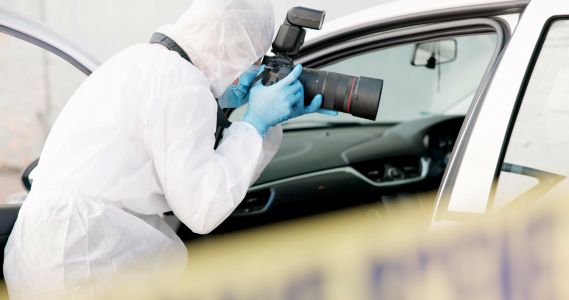
Why Do We Need Vehicle Forensics Software:
Most people drive an automobile every day, but not many are aware of just how powerful their vehicle is. Today, modern vehicles provide the digital evidence required to for a court to come to a verdict. Modern Vehicles provide the necessities for infotainment logs, telematics data, and crash-event records, which can be used to validate or invalidate a statement and can influence the overall outcome of a criminal or civil case.
Vehicle forensics software is the key to unlocking and understanding this critical information. At Defense Forensics, we help investigators, attorneys, and forensic examiners extract, decode, and interpret data with tools designed for accuracy, integrity, and to be upheld in a court of law.
Why Vehicle Forensics Software Matters:
Vehicles in 2026 are now providing key data points that can give a detailed description of events and logs within the vehicle. This kind of data is imperative to the digital world we live in today and can make or break research findings or an entire defense.
Common data points define:
- Pinpoint location
- Time stamp
- What occurred
- Who was involved
- The vehicles behavior before, during, and after an accident.
In the case of criminal and civil litigation, these insights can determine whether a driver acted intentionally, if there was a mechanical failure, and the truth behind conflicting statements. As critical as this information is, it is just as vital to access the data the correct way. Accessing vehicle forensic data requires specialized software capable of identifying modules, acquiring data safely, decoding proprietary formats, and presenting findings in a courtroom-ready format.
What Vehicle Forensic Software Actually Does:
Vehicle forensics software is built around three core functions: identify, acquire, and analyze, commonly displayed in platforms like Berla’s iVe Ecosystem.
Identifying Vehicle Systems:
Prior to any data being extracted, investigators are tasked with determining which systems inside the vehicle will contain relevant evidence. Teams require a deep understanding of the anatomy of the vehicle, locations of data storage, support for forensic tools, and the best method of acquisition. Vehicle forensics software simplifies the entire extraction and identification process to help the team of investigators:
Key identification tasks include:
- Decoding the VIN
- Mapping supported ECUs
- Flagging telematics, infotainment, and EDR modules
- Providing guided acquisition instructions
Acquiring Data from Vehicle Modules:
After the vehicle’s system has been identified, forensic acquisition, the process of capturing data without altering or damaging the source, is the next step. Common vehicle forensics software supports acquisitions from modules like EDRS, navigation/GPS systems, and Bluetooth or paired-device logs. Proper acquisition workflows require secure hardware interfaces, module-specific products, and strict read-only handling fit to ensure the evidence remains admissible and defensible.
Common acquisition sources include:
- Event Data Recorders (EDRs)
- Airbag Control Modules (ACMs)
- Telematics Control Units (TCUs)
- Infotainment and navigation systems
- Engine Control Modules (ECMs)
- Bluetooth and paired-device logs
Analyzing and Decoding Vehicle Data:
Investigative teams are required to work diligently as raw vehicular data is rarely readable in its native form. Vehicle forensic software must decode, parse, and reconstruct the information so that the data is something that can be put forth into an argument. These tools typically reveal insights behind crash and pre-crash behavior, telematics, location, and mechanical information. By combining datasets, investigators can build a clear timeline of the vehicle’s behavior to support their expert reports.
Common decoded data includes:
- Speed, braking, throttle, steering, and airbag timing
- GPS routes, harsh braking events, and vehicle health logs
- Call logs, text metadata, navigation history, Bluetooth activity
- Diagnostic trouble code, engine performance, mileage, and tampering indicators
How Vehicle Data Becomes Courtroom Evidence:
Once the data has been analyzed, vehicle data provides an objective and timestamped documentation of events. This information can be used to corroborate or contradict a witness statement, establish driver intent, and provide clarification when video evidence is incomplete or conflicting. Today, attorneys are primed to request EDR and telematics data early in a case, sometimes even before building out arguments.
How Defense Forensic Supports Vehicle Forensic Investigations:
 Defense Forensics provides a complete support ecosystem built to ensure vehicle data is safely extracted, interpreted, and presented with the highest level of accuracy and integrity. Our extraction processes are defined by industry-leading tools used to safely acquire data from supported vehicle systems while preserving evidentiary integrity. With our advanced decoding and analysis, our team transforms raw module data into defensible findings, vehicle timelines, driver behavior, and mechanical diagnostics. Our team of experts delivers litigation-ready reports and expert training programs to help legal teams understand how vehicle data impacts their cases.
Our support includes:
- Software-driven data extraction
- Advanced decoding and multi-module analysis
- Litigation-ready reporting and visual timelines
- Expert testimony and case consultation
- Training for attorneys and investigators
The Future of Vehicle Forensic Software:
As vehicle capabilities continue to evolve, the quantity and complexity of digital evidence from vehicles will continue to expand. Future forensic tools will need to be able to support autonomous driving logs, radar, onboard camera, and encrypted telematics streams. Our team at Defense Forensic remains committed to staying ahead of these trends by ensuring our clients have access to the most advanced tools and methodologies available.
If you have any questions or would like to talk to our team, please do not hesitate to contact us.